

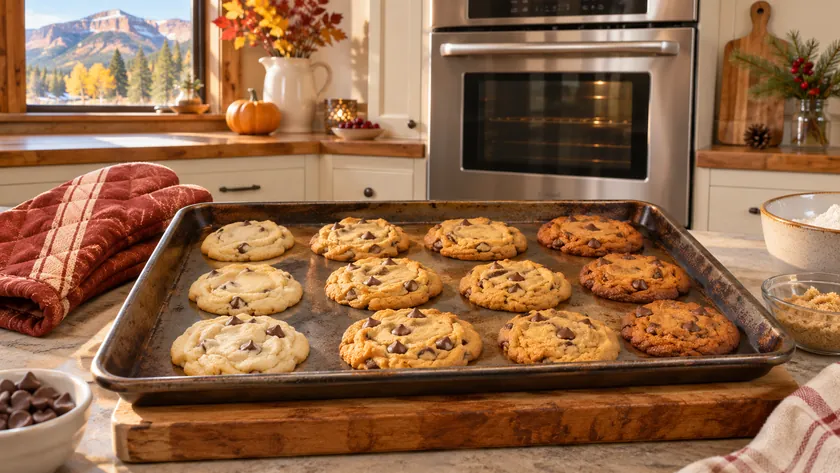
The cookies burn underneath. A casserole takes longer than it used to. Your favorite cake comes out differently every time.
That’s worth checking, but it doesn’t automatically mean your oven needs a new part. Cooking mode, pan placement and the recipe can all affect what comes out of the oven.
Before a holiday meal puts the pressure on, work through a few simple checks.
Settings and pans can change the result
Check whether the recipe calls for conventional baking or convection. Some ovens automatically adjust the temperature when convection is selected. Follow your model’s instructions rather than assuming the displayed setting works the same way in every mode.
Give the oven its recommended preheat time. Then use the rack position and cookware called for by the recipe and your owner’s manual. Changing several things at once makes it harder to understand what caused the difference.
Leave room for hot air to move around the pans. Crowding them against each other or the oven walls can create uneven results. Do not cover the oven floor or an entire rack with foil. Follow the manufacturer’s guidance on liners and accessories.
What can one thermometer reading tell you?
An oven normally cycles its heat on and off. Its temperature moves above and below the setting rather than holding one exact number every second.
That means a single reading from a hanging oven thermometer is not enough to establish a fault. Opening the door and the thermometer’s location can also affect the reading. Follow the testing instructions for your particular model before adjusting its calibration.
Some manufacturers recommend a controlled baking test. Whirlpool, for example, provides a biscuit test with specific instructions for the pan, rack and timing. Use the procedure that applies to your oven, rather than changing the temperature setting by guesswork.
In Durango, consider the recipe’s elevation instructions
A recipe developed near sea level may need adjustment here. Lower air pressure affects moisture loss and how quickly breads and cakes rise. That can change the finished result even when the oven is working correctly.
It does not mean every oven needs a temperature adjustment simply because it is in Colorado. Recipe adjustments depend on the food and elevation. Colorado State University Extension’s high-elevation guide is a useful starting point.
Consider the pattern: Is this one unfamiliar recipe, or have several familiar dishes suddenly started coming out differently?
When a service visit makes sense
If the oven will not heat, repeatedly shows an error, or continues producing poor results after you have followed the model’s cooking guidance, give us a call.
These checks are about settings and cooking results. They are not instructions to remove panels, test live electrical components or work on gas connections.
Before calling, write down:
- The model number, if you can reach its label safely.
- The cooking mode and temperature setting.
- Whether the problem happens every time or only occasionally.
- Any displayed error code.
- What changed, and when you first noticed it.
Those details help the technician understand the pattern before the visit.
Need help with an oven problem in Durango? Call Advanced Appliance Repair at 970-759-4194, or read about our oven repair service. Tell us what you are seeing so we can help you plan the next step.